From Virginia Woolf’s bleak winters to Shirley Jackson’s dreary Februaries, writers have often found in winter a season of monotony and melancholy. “The sameness of life,” Woolf wrote in her diary. The sameness of life. A seemingly simple phrase that perfectly encapsulates the heaviness of winter.
This morning, I sat down at my desk, ready to write about the upcoming novels I’m excited for– gifts, if you will, to help me get through the long, lingering months of February and March. I made some coffee and turned on Spotify; Norah Jones’s new album felt just right for this chilly, snowy Sunday. As my older cat, Venus, climbed into her window perch, getting cozy, I took in the picturesque view–the tree outside my window, its branches dotted with tiny seeds of flowers, now blanketed in snow, cars barely visible in the parking lot across the street, sparrows flitting from one tree to another. Venus was soon fixated on a bird on the tree, its chirp urgent, unrelenting. When I followed her gaze, I spotted the tail of a sparrow, frozen to death, standing still on the branch like a statue, its tiny body covered by a blanket of snow. I’d never seen a bird freeze to death before, and the sight of snow covering the sparrow like a warm blanket broke my heart into pieces. The chirping bird, another sparrow, appeared to be trying to help the fallen one, or that’s what I’d like to think. February. March. The months of contradictions, of irony. The juxtaposition of snow and seeds of spring, bright sunbeams and icy wind. Birds feeling it’s almost spring, only to be frozen to death. Humans thinking it’s almost spring, only to be
Fill in the blank.
“The sameness of life,” Woolf wrote.
But she also wrote:
I see the mountains in the sky; the great clouds; and the moon; I have a great and astonishing sense of something there, which is “it”—it is not exactly beauty that I mean. It is that the thing is in itself enough: satisfactory, achieved. A sense of my own strangeness, walking on the earth is there too: of the infinite oddity of the human position; with the moon up there and those mountain clouds.
Woolf was a true modernist, yes, but her writing, or rather her thoughts, were often tinged with the philosophy of romantic irony. I was reminded of Woolf’s thoughts when I left class around 4 p.m. last Wednesday. I had begun my Modernist Literature class with a discussion on Kant, the Lake District Poets, and romantic irony to highlight the complexity masked as deceptive simplicity in the writings of the Romantics. As we delved into the role of nature, our place in it, and our relationship with “it,” it started to snow. The snowfall got heavy quickly, but somehow, we could still see the intricate shape of each snowflake as it drifted down. It was quite poetic, especially considering I can’t remember the last time Istanbul saw that much snow (though my post from February 2021 shows that there was some snow then). “Speaking of romantic irony,” I told my students, “I can’t help but feel peace and awe seeing these delicate snowflakes.” I added, “Even though I have to drive home in this, knowing the traffic will be horrendous.”
If you’ve ever lived in Istanbul, you know.
You know that the city is no longer able to handle any crisis due to its overwhelming population, which continues to increase with no end in sight. National holidays? Rain? Rush hour? The city freezes. Snow? Congestion. Snow during rush hour? Well, my usual 50-minute drive home turned into a four-hour odyssey. It was strange sitting there in my car. Trapped in the endless gridlock, there was no beauty, order, or harmony within that moment, just chaos. But still, somehow, I felt what Woolf describes as “a great and astonishing sense of something there, which is ‘it.'” As I watched the snowflakes cover the road and trees in a blur of white, I couldn’t help but feel something indescribable, something elusive, akin to what Woolf calls “the infinite oddity of the human position.” The juxtaposition of traffic jams, canceled classes, being snowed in, with a thousand things left undone, knowing that the homeless, and stray dogs and cats outside need help, and yet feeling utterly helpless–all this against the vibrant sunlight, the laughter of children playing in the snow, the myriad versions of snowmen scattered around, and the satisfying crunch of snow beneath my winter boots, soft now but soon to turn into slush. In such moments of contradiction, one is compelled to recognize both the infinite possibilities and the limitations of being human.
When I think that February, not April as Eliot’s speaker in “The Waste Land” suggests, may, in fact, be the cruelest month—with its unexpected snowstorms, meaningless holidays, the disposal of fairy lights and Christmas trees, and the possibility of seeing tiny sparrows frozen to death–I think of the traffic jam stretching; the roads closing; the trees draped in white; the snowflakes drifting down, unhurried, unlike me, you and everyone else rushing through the congested city only to get home. The world, momentarily suspended. I know the thick, fluffy white will soon turn into slush, the sliding cars, the uncertainties, the anxieties. I think of those who don’t have a home to rush to, stray cats and dogs (and tiny sparrows) included, hoping they are warm and cozy. Still, I feel “a great and astonishing sense of something there, which is ‘it’—not exactly beauty,” not exactly comfort, no, but a sense of completeness. “A sense of my own strangeness,” hopelessness and hope, of “the infinite oddity of the human position.” The snow falls, the moon up there, barely visible. I think of morning walks in the snow, hot coffee, my niece and nephew building snowmen–this vision of curling up with good books, my cats pressed warm against my side, falling asleep, all wrapped up in the infinite oddity of the human condition.
I’m not sure how I went from sitting down to write about the upcoming releases to drifting into thoughts of Woolf and the snow. Was it the lovely sparrow? Possibly.
In this vision of curling up with good books, the list is long—too long to count. But there are a few upcoming novels that have been on my radar this year. Two of my favorite authors, Laila Lalami and Chimamanda Ngozi Adiche, have new novels coming out in March, and some exciting debuts are being released by the end of February.
If you’re looking for contemporary reads, down below, I share five novels I’m especially anticipating—gifts, as I see them, to help me get through February and March.
Let me know what’s on your list; I’m always looking for books to add to mine!
5 Exciting Upcoming Novels on My List
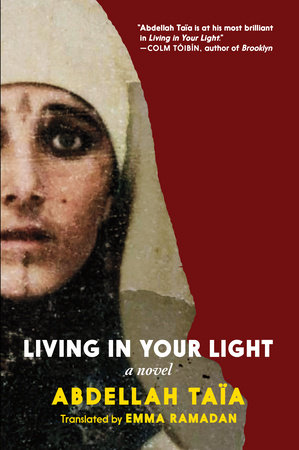
1. Living in Your Light by Abdellah Taïa, Translated by Emma Ramadan
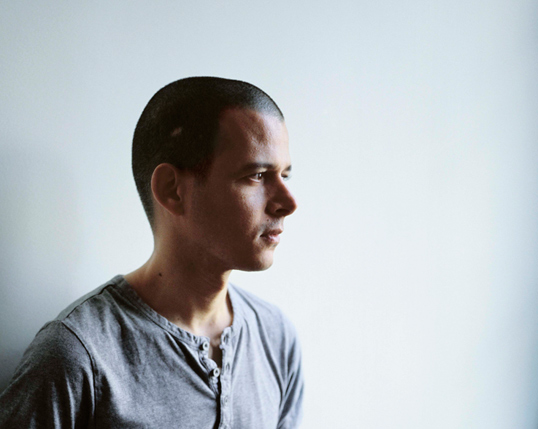
Abdellah Taïa, a Moroccan writer living in Paris, is one of the most striking Francophone authors to watch out for. I first learned about him after reading his interview in Asymptote, where he spoke about coming out as a gay man in 2007 in an interview with a Moroccan magazine. “It was a public proclamation that reverberated through all levels of Moroccan society,” Jason Napoli Brooks writes, “Morocco’s biggest-selling newspaper denounced him, and many of the country’s bloggers decried him, saying he should be stoned. The first Moroccan writer to live openly and unapologetically as a homosexual, Taïa has since been viewed as a literary ambassador for Morocco’s ‘I’ Generation, which has decidedly bucked self-censorship and begun the fight for individual freedoms in Morocco.”
Coming out in two days on February 25th, Living in Your Light, which Taïa dedicated to his mother, will be my first novel by Taïa, and I look forward to delving deeper into his ouvre. He writes in French, but in an interview with Electra, he states:
It’s obvious that my writing can only come from my Moroccan roots because I was born in Morocco, in 1973, and lived there for 25 years before coming to Europe. Even if, one day, I decided for some stupid reason to change how I see the world, I wouldn’t be able to, because it’s something that’s created within, even before we’re aware of the way it dwells within us. It’s not just my view of the world; everything I am is Moroccan and Arab-speaking, not Francophone. I was born into a large and very poor family that had to fight constantly to survive. It’s always there; it’s something you can’t forget. You don’t betray your roots just by writing in French.
Living in Your Light Description:
Three moments in the life of Malika, a Moroccan countrywoman. From 1954 to 1999. From French colonization to the death of King Hassan II. It is her voice we hear in Abdellah Taïa’s stunning new novel, translated by Emma Ramadan, who won the PEN Translation Prize for her translation of Taia’s last novel, A Country for Dying. Malika’s first husband was sent by the French to fight in Indochina.
In the 1960s, in Rabat, she does everything possible to prevent her daughter Khadija from becoming a maid in a rich French woman’s villa. The day before the death of Hassan II, a young homosexual thief, Jaâfar, enters her home and wants to kill her. Malika recounts with rage her strategies to escape the injustices of History. To survive. To have a little space of her own.
Malika is Taïa’s mother: M’Barka Allali Taïa (1930-2010). This book is dedicated to her.
2. Fundamentally by Nussaibah Younis
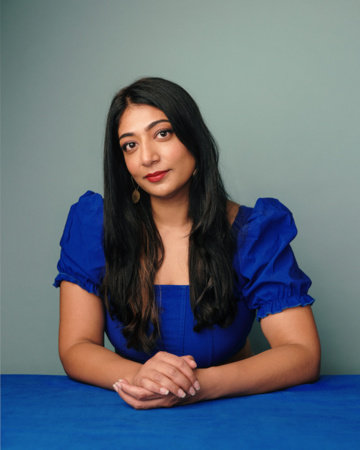
On February 25th, a debut novel from a fellow academic will also be released, and its premise is incredibly interesting. As an expert on contemporary Iraq, Dr. Nussaibah Younis presents an intriguing, witty story about an academic from London, who makes it her mission to rehabilitate ISIS brides. You can read the description below.
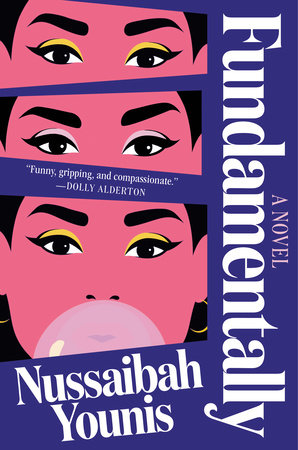
Fundamentally Description:
When Dr. Nadia Amin, a long-suffering academic, publishes an article on the possibility of rehabilitating ISIS brides, the United Nations comes calling, offering an opportunity to lead a deradicalization program for the ISIS-affiliated women held in Iraqi refugee camps. Looking for a way out of London after a painful, unexpected breakup, Nadia leaps at the chance.
In Iraq, Nadia quickly realizes she’s in over her head. Her direct reports are hostile and unenthused about taking orders from an obvious UN novice, and the murmurs of deradicalization being inherently unethical and possibly illegal threaten to end Nadia’s UN career before it even begins. Frustrated by her situation and the unrelenting heat, Nadia decides to visit the camp with her sullen team, composed of Goody Two-shoes Sherri who never passes up an opportunity to remind Nadia of her objections; and Pierre, a snippy Frenchman who has no qualms about perpetually scrolling through Grindr.
At the camp, Nadia meets Sara, one of the younger refugees, whose accent immediately gives her away as a fellow East Londoner. From their first interaction, Nadia feels inexplicably drawn to the rude girl in the diamanté headscarf. She leaves the camp determined to get Sara home.
But the system Nadia finds herself trapped in is a quagmire of inaction and corruption. One accomplishment barely makes a dent in Nadia’s ultimate goal of freeing Sara . . . and the other women, too, of course. And so, Nadia makes an impossible decision leading to ramifications she could have never imagined.
A triumph of dark humor, Fundamentally asks bold questions: Who can tell someone what to believe? And how do you save someone who doesn’t want to be saved?
3. What You Make of Me by Sophie Madeline Dess
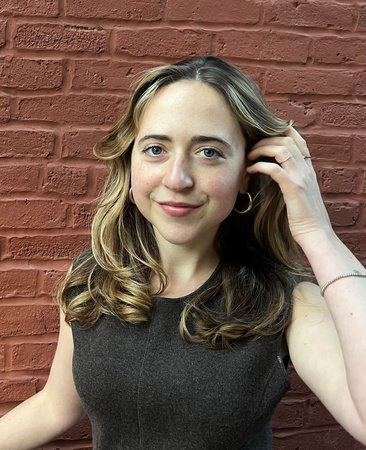
Another exciting debut coming out on February 25th is What You Make of Me, a novel on love and art that promises to be strange, fun, and hauntingly profound. I’m not sure what to expect from this one, but debut novels usually surprise me in the most delightful ways–I’m excited to see what What You Make of Me brings to the table!
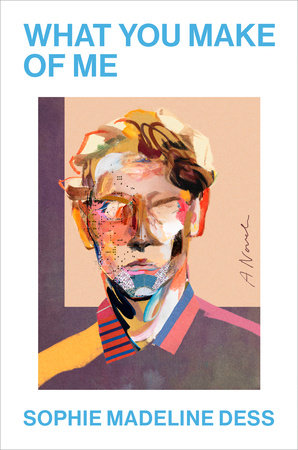
What You Make of Me Description:
On the eve of her first solo show, Ava is feeling defiant. The art gallery acolytes have insisted on writing “explanations” of her paintings for an accompanying catalog, but what do they know of her work? What do they know of her brother, Demetri, whose face echoes across every canvas?
After all, Ava and Demetri have only ever had each other. Abandoned first by their mother, who drowned in the Long Island Sound, and then again by their father, who couldn’t see beyond his grief, each sibling has always been the other’s most ardent supporter: Demetri encouraged Ava’s raw talent as a painter, while Ava pushed Demetri to pursue filmmaking. But as they make their way in New York, the codependency that once sustained them soon threatens to be their undoing. Betrayals mount, fueled by Ava’s reckless acts and her disdain for Demetri’s last-ditch efforts to make something of consequence, but what ultimately and irreversibly tips the scales won’t be found on canvas or film. Because now, at thirty-one, Demetri is dying.
As Ava reckons with the meaning of her portraits, what soon emerges from her intimate, offhanded, and mischievous meditations is a stunning and unsettling confession of secrets, epiphanies, rivalry, and infidelity. Vaulting between childhood and the days leading up to Demetri’s death, here is a searing portrait of two remarkable siblings reckoning with the limits of loyalty. Heralding the arrival of an impressive new talent, What You Make of Me lays bare the thin line between success and sacrifice.
4. The Dream Hotel by Laila Lalami
Laila Lalami’s new experimental novel is set to be released on March 4th, and I absolutely cannot wait to get my hands on it. I call it “experimental” because it’s set in the near future, with a dystopian vibe. Dystopias aren’t usually my cup of tea, but if Lalami’s writing it, sign me up!
On her website, Lalami explains how she came up with the idea for The Dream Hotel:
One morning in 2013, I picked up my phone when I woke up and noticed a Google notification that said, “If you leave right now, you will make it to YogaWorks at 7.28.” I had never told Google what day of the week, what time of day, or even that I went to yoga, but the company had tracked my movements and in time its algorithms had learned my schedule and habits.
Not long after, the magazine Slate reported that Facebook keeps track of everything its users do on the app, including their keystrokes. I realized that if Facebook has a record of unposted comments, in effect it has access to our unvoiced opinions, which is to say our thoughts. I remember I turned to my husband and said, “Pretty soon the only privacy we will have will be in our dreams.” And then I thought, wait. What if someday even dreams are monitored?
I started exploring this idea in novel form, but after about seventy pages I hit a road block and decided to focus on a different novel I’d been working on, a family story set in the Mojave. Still, the idea of dream surveillance stayed in the back of my mind and, after The Other Americans was published, I returned to it, working slowly through the early days of the pandemic. I completed The Dream Hotel a few months ago and it is now in production, with this striking cover from the incomparable Jack Smyth.
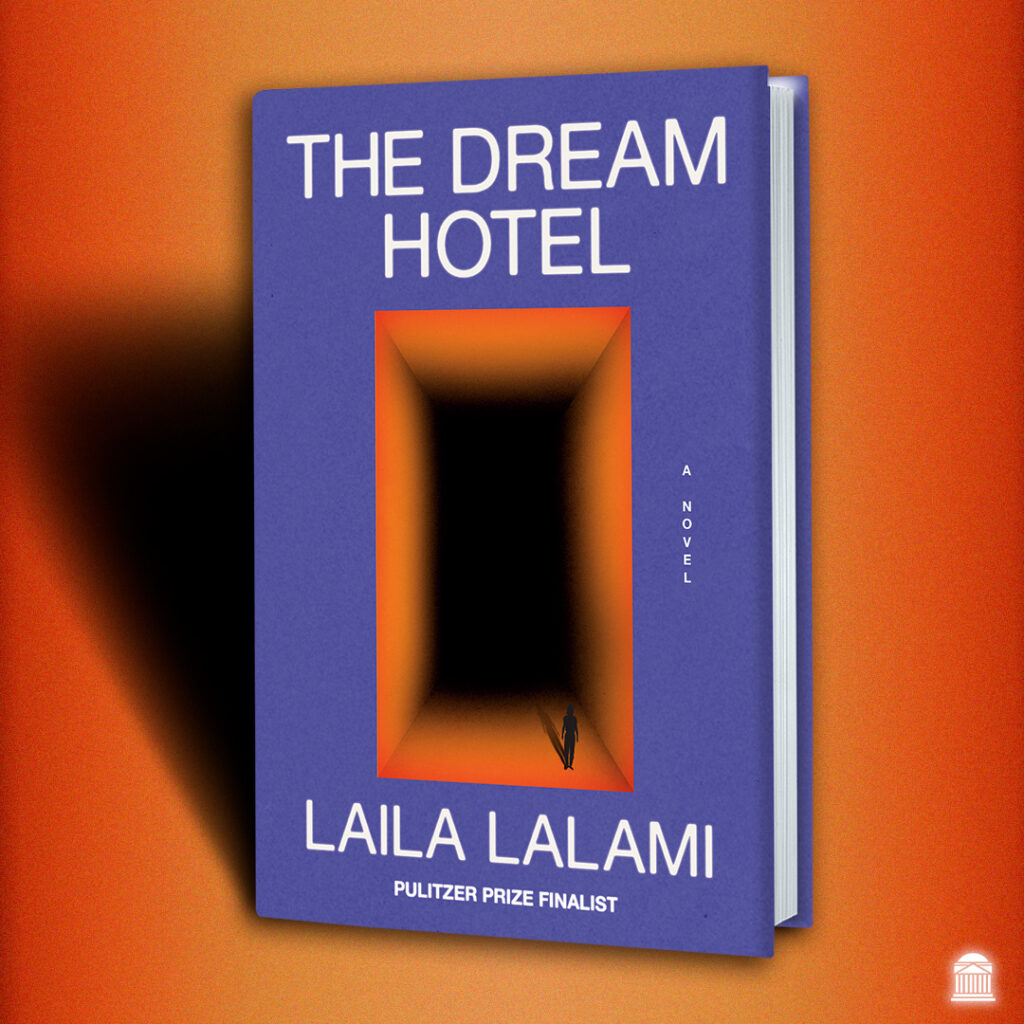

The Dream Hotel Description:
The Dream Hotel is set in Los Angeles in the near future and follows a thirty-eight-year old archivist. Sara leads what is by all appearances an ordinary life: she works at a local museum, has a husband and twin toddlers, and spends her free time hiking or backpacking. One day, on her return home from a conference abroad, agents from the Risk Assessment Administration pull her aside and inform her that she will soon commit a crime.
Using data from her dreams, the RAA’s algorithm has determined that Sara is at imminent risk of harming the person she loves most: her husband. For his safety, she must be kept under observation for twenty-one days. The agents transfer Sara to a retention center, where she is held with other dreamers, all of them people trying to prove their innocence from different crimes. With every deviation from the strict and ever-shifting rules of the facility, their stay is extended. Months pass and Sara seems no closer to release. Then one day, a new resident arrives, disrupting the order of the facility and leading Sara on a collision course with the very companies that have deprived her of her freedom. Order here.
5. Dream Count by Chimamanda Ngozi Adiche
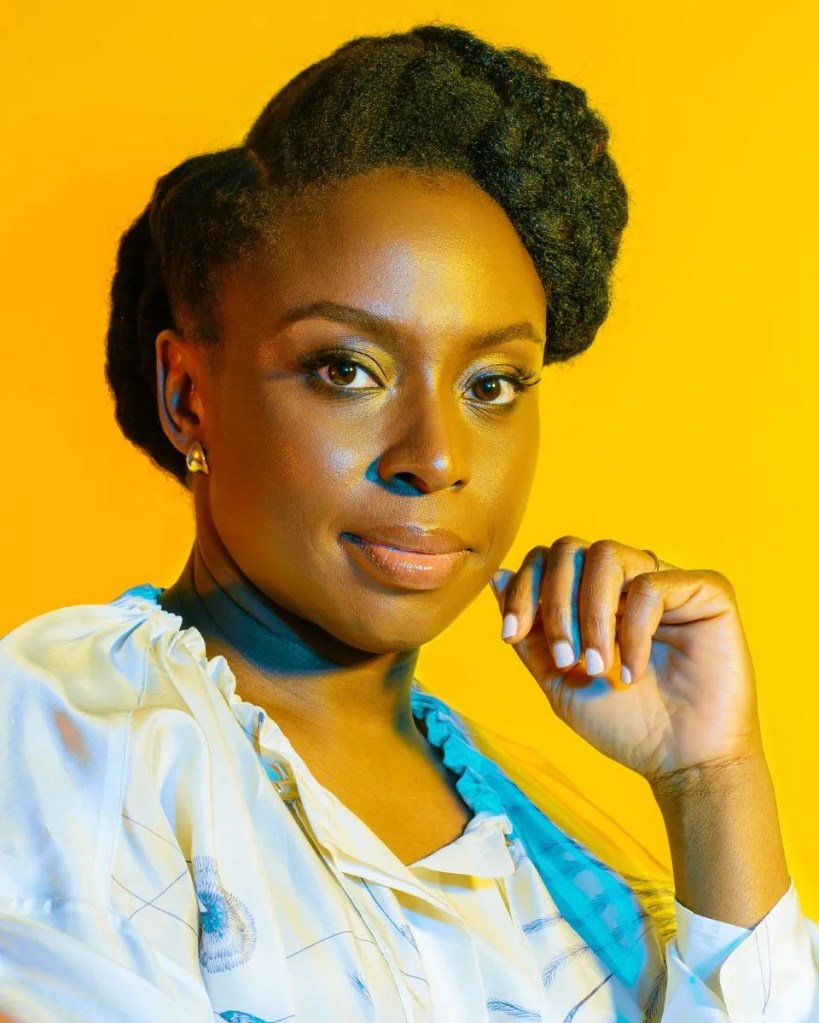
Last but not least, March 4th will also see the release of Chimamanda Ngozi Adichie’s new novel, Dream Count. March this year seems to be a sacred month for women’s fiction, and it’s interesting to note the similarities between the titles of Lalami’s and Adichie’s novels.
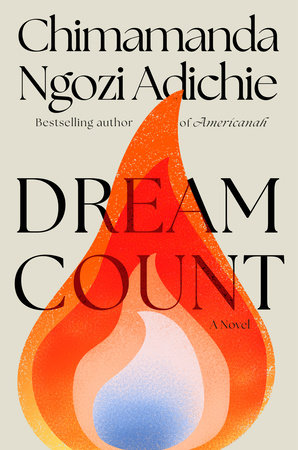
Dream Count Description:
Chiamaka is a Nigerian travel writer living in America. Alone in the midst of the pandemic, she recalls her past lovers and grapples with her choices and regrets. Zikora, her best friend, is a lawyer who has been successful at everything until—betrayed and brokenhearted—she must turn to the person she thought she needed least. Omelogor, Chiamaka’s bold, outspoken cousin, is a financial powerhouse in Nigeria who begins to question how well she knows herself. And Kadiatou, Chiamaka’s housekeeper, is proudly raising her daughter in America—but faces an unthinkable hardship that threatens all she has worked to achieve.
In Dream Count, Adichie trains her fierce eye on these women in a sparkling, transcendent novel that takes up the very nature of love itself. Is true happiness ever attainable or is it just a fleeting state? And how honest must we be with ourselves in order to love, and to be loved? A trenchant reflection on the choices we make and those made for us, on daughters and mothers, on our interconnected world, Dream Count pulses with emotional urgency and poignant, unflinching observations of the human heart, in language that soars with beauty and power. It confirms Adichie’s status as one of the most exciting and dynamic writers on the literary landscape.
Bonus: Kate &Frida by Kim Fay
I’d never heard of Kim Fay before coming across Kate & Frida, but her new novel seems like a fun, light read. Since most of the books I read for work are heavy migration and displacement stories, I enjoy having lighter reads before bed, books that leave me feeling calm and warm. Kate & Frida is about friendship, love, books, bookstores, and food. And the story takes place in the 90s–what more would I want?

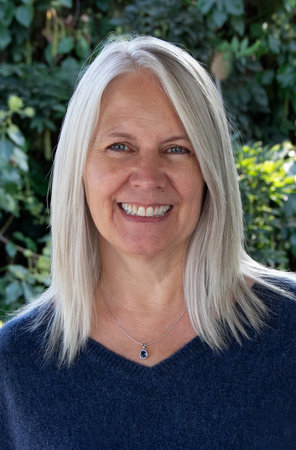
Kate & Frida Description:
Twentysomething Frida Rodriguez arrives in Paris in 1991, relishing the city’s butter-soaked cuisine and seeking her future as a war correspondent. But then she writes to a bookshop in Seattle, and receives more than just the book she requests. A friendship begins that will redefine the person she wants to become.
Seattle bookseller Kate Fair is transformed by Frida’s free spirit, spurred to believe in herself as a writer, to kiss her handsome coworker, and to find beauty even in loss. Through the most tumultuous years of their young lives—personally and globally—Kate and Frida sustain and nourish each other as they learn the necessity of embracing joy, especially through our darkest hours. This mouthwatering oasis of a novel is a love letter to bookshops and booksellers, to the passion we bring to life in our twenties, and to the last precious years before the internet changed everything.
 READING & WRITING TO MAKE MEANING OF THE WORLD AND BEYOND