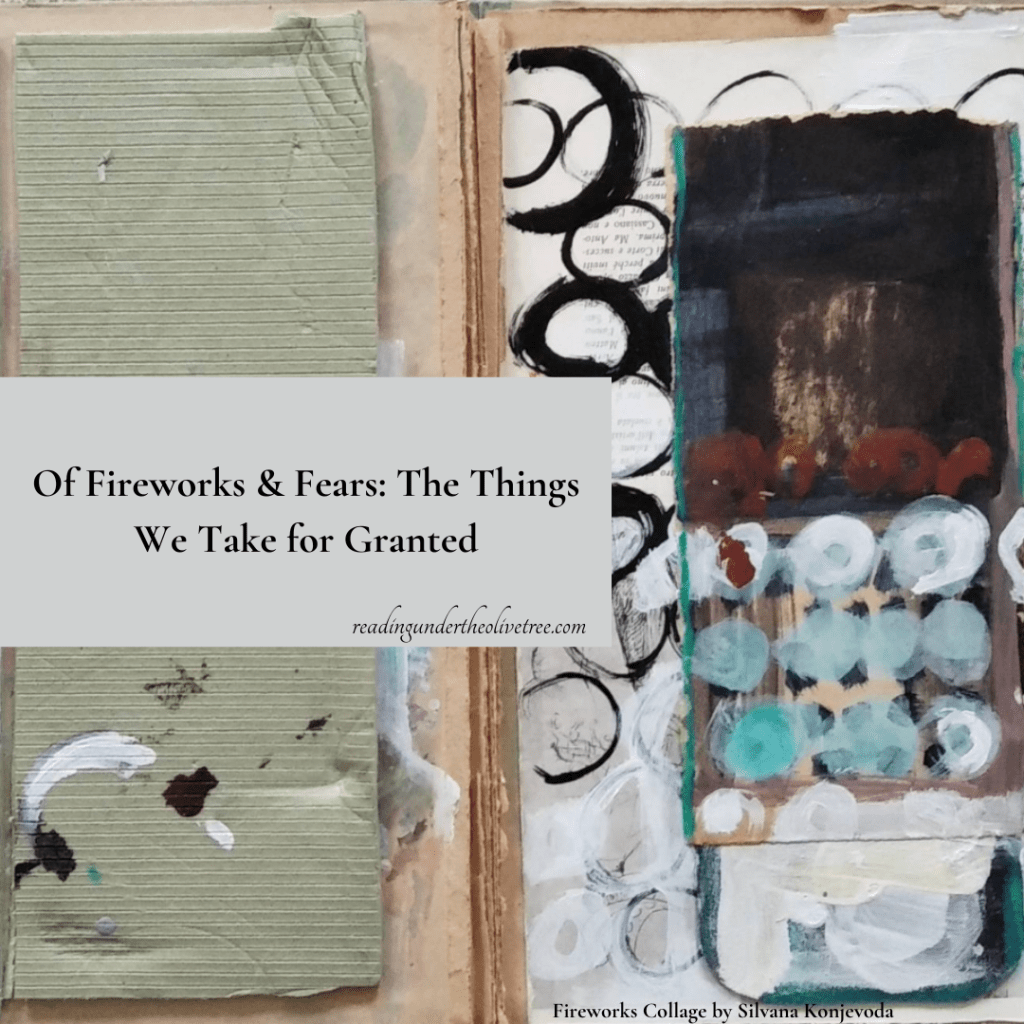
On July 15th, 2016, I woke up five thousand miles from a tiny apartment in the middle of America I called home. I recall having a moment of confusion about my whereabouts the moment I opened my eyes. I remember the loud calls of Laughing Doves that inhabited my parents’ garden in the summer—which I found enchanting. But I never felt quite at ease staying in my parent’s guest room in Istanbul. I wasn’t necessarily a guest, nor was I a permanent presence in their lives; the liminal space I had occupied in America took on a new, strange shape and form here.
For the past three days, I’d been waking up to the eerily comforting voice of the news anchor on TRT, Turkey’s national public broadcaster as she announced the increasing inflation rates, her voice akin to that of a pediatric nurse delivering the good news to new parents: “it’s a boy!” How this uncontrolled surge was normalized, I had no idea. A lot of things didn’t make sense in this country, but you noticed them and went on with your life.
The first few days back in Istanbul were a blur of jetlag, idle hours, and catching up with my parents, whom I hadn’t seen in a year. July 15th was no different, except for a stroll I took at the farmer’s market. I returned to my parents’ place around eight o’clock, juggling grocery bags and packages of Kurukahveci Mehmet Efendi coffee I’d gotten for my friends back in the States. I’d had to take one of the minibuses to return home, the smaller buses often run by shady groups of drivers. I was about to complain about the crazy driver and how we’d almost gotten into an accident when I walked in, but the hushed stillness of the living room stopped me in my tracks. I heard my father whisper, “I don’t feel well.” Across the room on the television, TRT was on. Following his fixated gaze, I saw the news anchor reciting a manifesto. As she was reading the words that covered the entire screen, my mother went to shut the windows in a futile attempt to keep away the sounds of fighter jets flying over the city, her movement slow and calculated. It took me a while, but I eventually realized what the news anchor was being forced to read aloud to the nation. I remember standing there petrified in the middle of the living room with the bags strewn all over the floor, my eyes glued to the screen, where the news anchor’s hands clasped together, suspended mid-air like her words–
Dear valuable citizens of Turkey.
Increasing terrorism. Damage to the constitutional order.
Dismissal of human rights.
The need to preserve national unity.
To hold the authoritarian system accountable.
Obliterate corruption.
Promulgate a democratic constitution.
“It’s all fine for sure,” my father stammered. His face had turned crimson; beads of sweat were forming on his hairline. He had a habit of stuttering when he was agitated. What was it he was feeling at the moment? Fear? Disbelief? Anxiety? Disappointment? Was he recalling the coup of 1971? 1980? Did he hope the 1993 coup attempt would be the last his generation would ever live through?
My cell phone vibrated in my purse. I recall staring at the message I received from a Serbian friend I’d met at a campus event at Michigan, reading and rereading it as I struggled to grasp its reality.
“Watching the news. I’m sorry you’re going through this. Stock up on necessities and foods that can last a long time in case full war breaks out, like honey, peanut butter, etc. Get replacement batteries for your cell phone in case you get to record history. Having spent half of my life in war, I really hope you come back to America.”
The sound of gunshots and chants from the television brought me back to the present moment. The Bosporus was shut down, barricaded by tanks and military police ready to shoot, and thousands of people were running towards them. The glorious lights of the bridge continued to flicker.
And I found myself running upstairs to grab my passport.
I’m thinking of July 15th, 2016, sitting at a cozy bookstore café in Batumi, Georgia. The flickering fairy lights decorating the large window mask the gray that has blanketed the city since I arrived. I’ve been here for a week now, and everything has been hazy– dreamlike. When my partner’s application for residency in Turkey was rejected, he was asked to leave the country as soon as possible. We had to be creative in figuring out where we, or rather I, as a Turkish citizen, could go without a visa. In 2022, Turkey started tightening residency regulations, ultimately deciding in 2024 to discontinue issuing residence permits to tourists. I’m not sure why my partner, a freelance journalist from England who had an official Turkish sponsor (me), was denied residency. Either way, everything happened so quickly and unexpectedly that I didn’t have time to apply for a visa to England or Europe (elsewhere, I wrote about the frustrating process Turkish citizens go through when applying for a Schengen). So, we chose Batumi, Georgia as our temporary place to stay in January.
I’ve always wanted to visit Georgia and the Caucasus, but arriving here unexpectedly with no detailed plans left me discombobulated. Grappling with taxi drivers at the airport who seemed intent on scamming us did not help. It took ages to figure out the bus system, and at first, people didn’t seem particularly welcoming. Around 5 p.m. the following day, we started hearing loud, explosive sounds that persisted well into the night. A quick Google search pointed to the pro-European Union protests unfolding across the country. There was little information about the details of the protests in English; a few articles on some questionable websites claimed that protestors in Tbilisi and Batumi were using fireworks against the police.
The pro-EU protests in Georgia have been going on for over two months now. Since its independence from the Soviet Union in 1991, the country has pursued EU membership and, in fact, received EU candidate status in 2023. In November last year, however, the government shifted course. PM Irakli Kobakhidze announced a four-year suspension of EU talks after the European Parliament rejected the election results over significant “irregularities.” The ruling Georgian Dream party accused the EU of using accession talks to “blackmail” the country. So, the government further declared that it would refuse EU budgetary grants until the end of 2028. The demonstrations in Georgia have continued since then, showing no signs of slowing down. Although the protests have been framed by the EU-Georgia conflict, they also appear to signify a form of resistance against anti-LGBTQ, pro-Russian ideologies as pointed out by the pro-EU citizens.
Before arriving in Batumi, I was aware of the protests but didn’t anticipate their scale. The fireworks and gunshots continued the entire night on our second day. Around 11 p.m., the exhaustion from the previous day’s travel helped me drift off to sleep. At midnight, the sound of fireworks from the neighborhood jolted me awake. Any attempt to describe how I felt at that moment would be fictitious; everything after was a blur. An anxiety attack followed, and I couldn’t quite understand what exactly had brought it on. In a panic, I immediately tried changing my flight back home– but would it even be safe to go to the airport and fly? And if not, how long would we be stuck here?
It wasn’t until I thought of messaging someone I knew in Georgia that my partner’s reassurance began to ease my anxiety. “January 14th is the Old New Year in Georgia,” my acquaintance said, “and this is how we celebrate it! You have no reason to worry.“
I took a deep breath–
I needed time to process all this.
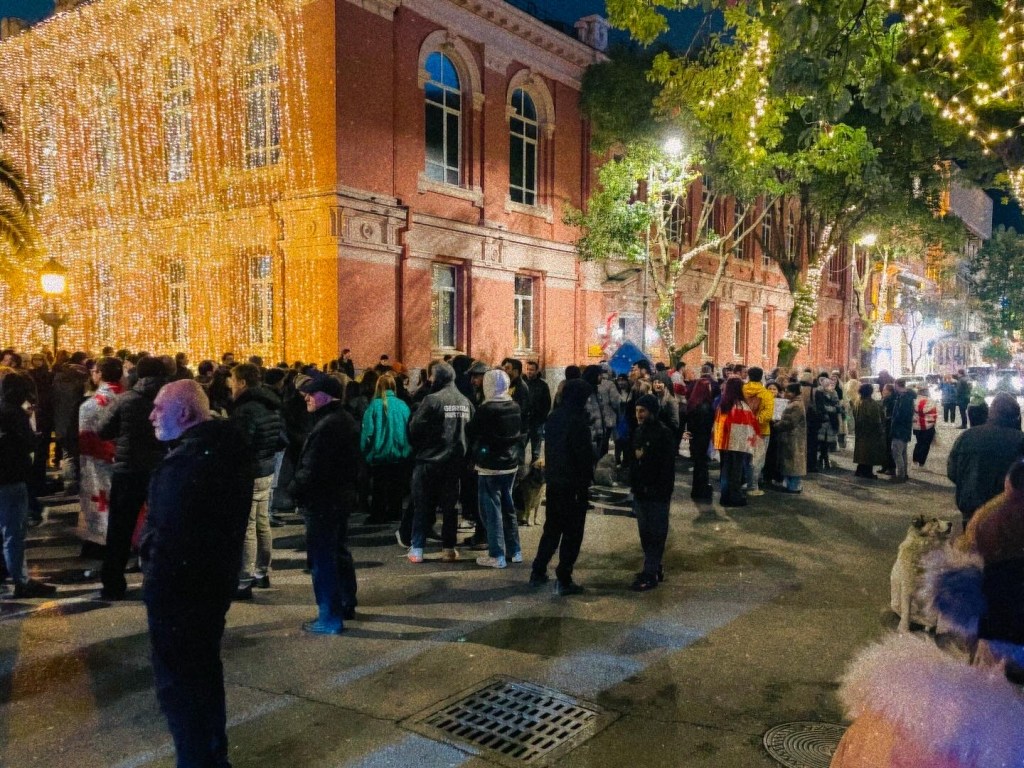
It turns out the Old New Year is celebrated across the country with fireworks and, occasionally, gunshots fired from balconies. Later, the articles I read confirmed that protestors in Tbilisi had used fireworks against the police. However, the protests here in Batumi, which now take place every night around Europe Square, have been peaceful.
To be honest, I felt embarrassed by my reaction. As I reflected on what had happened that night, I came to understand how terrifying memories can resurface in the most unexpected ways. The loud shots that startled me awake had transported me back to July 15th, when I couldn’t sleep a wink, overwhelmed by the echoing sounds of F-16 jets, gunshots, and the uncertainty of what the morning might bring. I remember the anxious thoughts racing through my mind then. Would I be able to return to the States to complete my PhD, or would the country shut down for a while? Would I lose my scholarship if I couldn’t return? Would the coup lead to a civil war? What would happen if it did? It’s strange how these things work—on January 14th, in Batumi, at midnight, all my fears from the night of the coup came rushing back.
It is, indeed, one of those situations where, in hindsight, you don’t know whether to laugh or cry.
The failed coup in Turkey certainly pales in comparison to the ongoing atrocities, conflicts, and wars that continue to afflict thousands of people in various parts of the world. Given the immense suffering faced by others, my experience feels small in the grand scheme of things, yet it makes me think about the complex nature of displacement and belonging. It seems that the scale of the calamity may not matter when it comes to conflict and suffering—particularly in the contemporary political landscape, where anything can happen at any moment, and the repercussions seem almost nonexistent, as seen in the Russian war on Ukraine and the Israeli war on Palestine. Maybe this is an illness that afflicts us all Middle Easterners, this deep-rooted fear that conflict may erupt at any moment and spiral out of control.
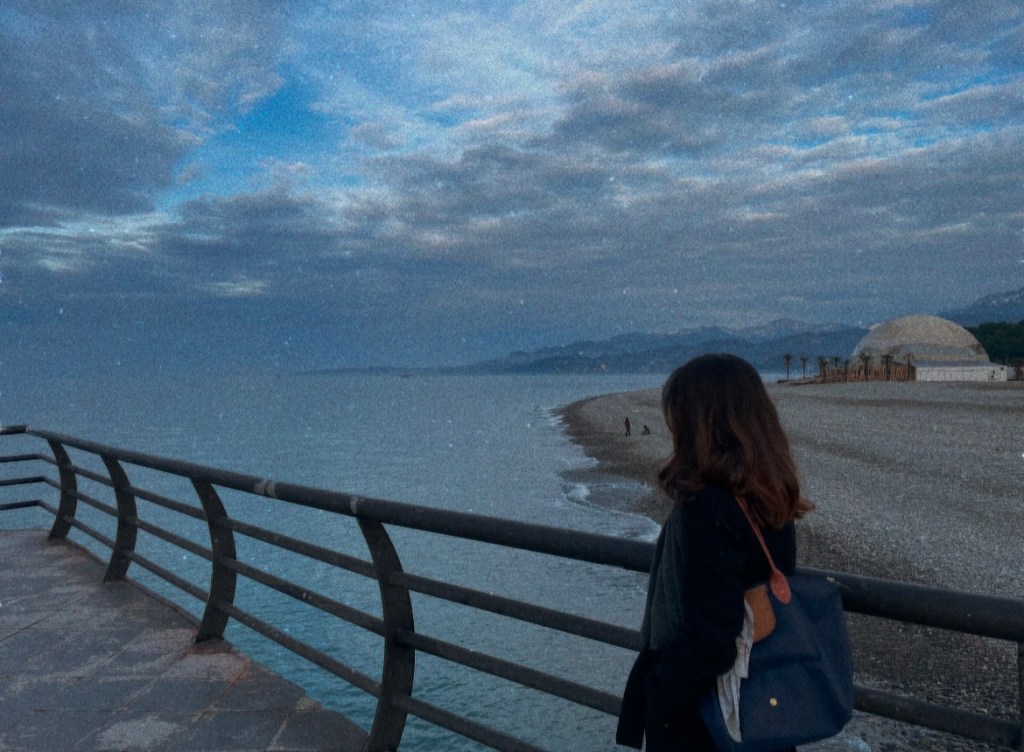
This small town, Batumi, bordering Northern Turkey, is not far from home; I can drive back to the Turkish border in forty-five minutes. But, perhaps, because I’m here by circumstance, it makes me think about how difficult it must be to have to leave your home. Sitting here at this coffee shop in Batumi, surrounded by books, warm coffee, and flickering lights, I realize how much we take for granted—how fleeting stability can be and how deep the pain of displacement must feel.
But if you look closely, the city itself also offers a panacea for homesickness.
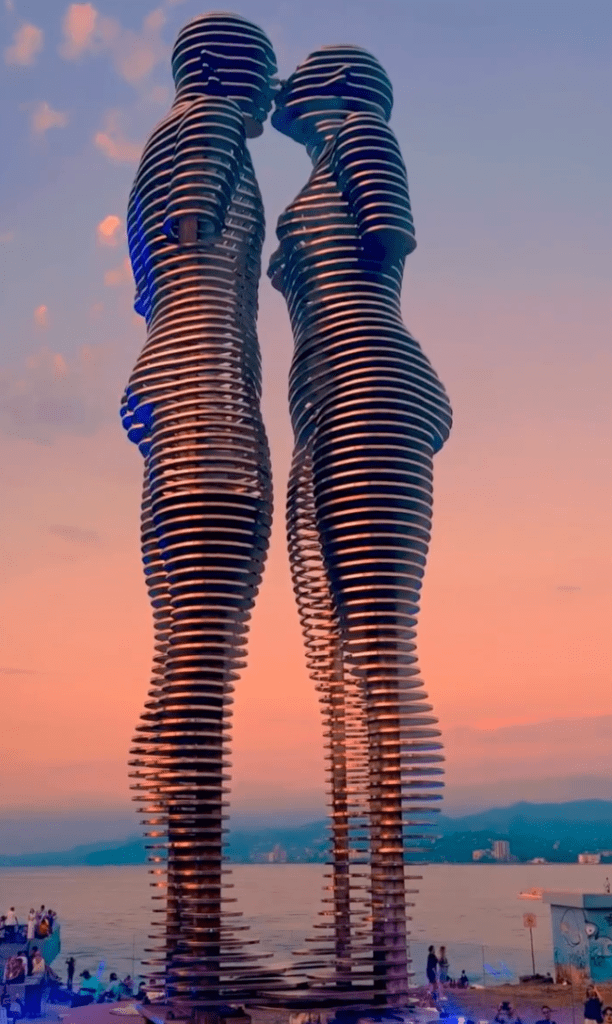
The moving sculptor of Ali and Nino, for instance, represents the potential for diverse cultures to merge and connect. The statue is based on the legendary love story of a Christian Georgian princess and a Muslim Azerbaijani boy, which was discovered and published in 1934. Every night, the eight-meter-high constructions of Ali and Nino move in graceful circles. They draw closer to one another every ten minutes, merging as one– to part again, repeating this poetic cycle throughout the evening.
Indeed, the coexistence of different cultures and religions stood out to me as one of Batumi’s defining characteristics. I haven’t been here long, nor do I have the political expertise to comment on how harmonious this coexistence is today, yet there’s a certain peace in hearing the church bells from the St. Nicholas Church ring out just a few hours after the call to prayer echoes from the Batumi Central Mosque. Armenian, Israeli, Azerbaijani, and Turkish restaurants line the streets, set against a backdrop where Soviet-era buildings, Ottoman and Russian influences, and modern skyscrapers stand side by side. The first time I visited Europe Square, I knew it right away; I knew that the city is a pot that doesn’t melt, holding its diverse influences distinct yet somehow still unified. I don’t mean to paint a utopic picture here–I know all too well the historical struggles of the nation to maintain its Georgian identity. But my experience here so far suggests that diversity is also an integral part of what it means to be Georgian, bringing to mind a passage from Ali and Nino, where Ali describes his town Baku in the early 1900s:
Our old town is full of secrets and mysteries, hidden nooks and little alleys. I love these soft night murmurs, the moon over the flat roofs, and the hot quiet afternoons in the mosque’s courtyard with its atmosphere of silent meditation. God let me be born here, as a Muslim of the Shiite Faith, in the religion of Imam Dshafar. May he be merciful and let me die here, in the same street, in the same house where I was born. Me and Nino, a Christian, who eats with knife and fork, has laughing eyes and wears filmy silk stockings. (1937; 2011, chap. 2)
In the novel, Ali often refers to Baku’s “undecided geographical situation” (1937; 2011, chap. 1), a notion that represents the city’s historical position as a crossroads of empires, cultures, and conflicts. In Batumi, too, this sense of “undecidedness” is palpable not only in terms of borders but in the convergence of traditions. This cultural multiplicity seems more like an ongoing dialogue to me rather than a conflict, much like the one with which Ali grapples in Baku.
Returning to July 15th, 2016, I mentioned earlier that my instinct that night was to grab my passport and leave the country. I did take it, holding it in my hands for a while, but the thought of leaving my family and friends behind made me put it down. It doesn’t surprise me that I had the same instinct last week when those memories unexpectedly resurfaced during the Old New Year celebrations in Georgia. After I found out about the cause of fireworks (which, by the way, are still occasionally shot off), I still considered returning home, especially with the protests continuing. But in hindsight, I’m glad I stayed. Batumi is teaching me many things, one of which I hold dear: it’s not the geographical “undecidedness” that creates friction and conflict, but the way people come to terms with their place within it.
At least, it has brought me back to this space, my corner on the internet, that I neglected in the past year as I was busy working on my manuscript. In a way, this return feels like a quiet reclaiming of my own rhythm, a small but necessary pause amid uncertainty and the fast-paced life I’ve been caught up in. I’m thankful for this pause, for coming back to RUOT to write, and for the reminder that even in the chaos that is life, cliché as it may be, one can find a moment to reflect and find peace.
So, here’s to the first post of 2025—and many more to come!
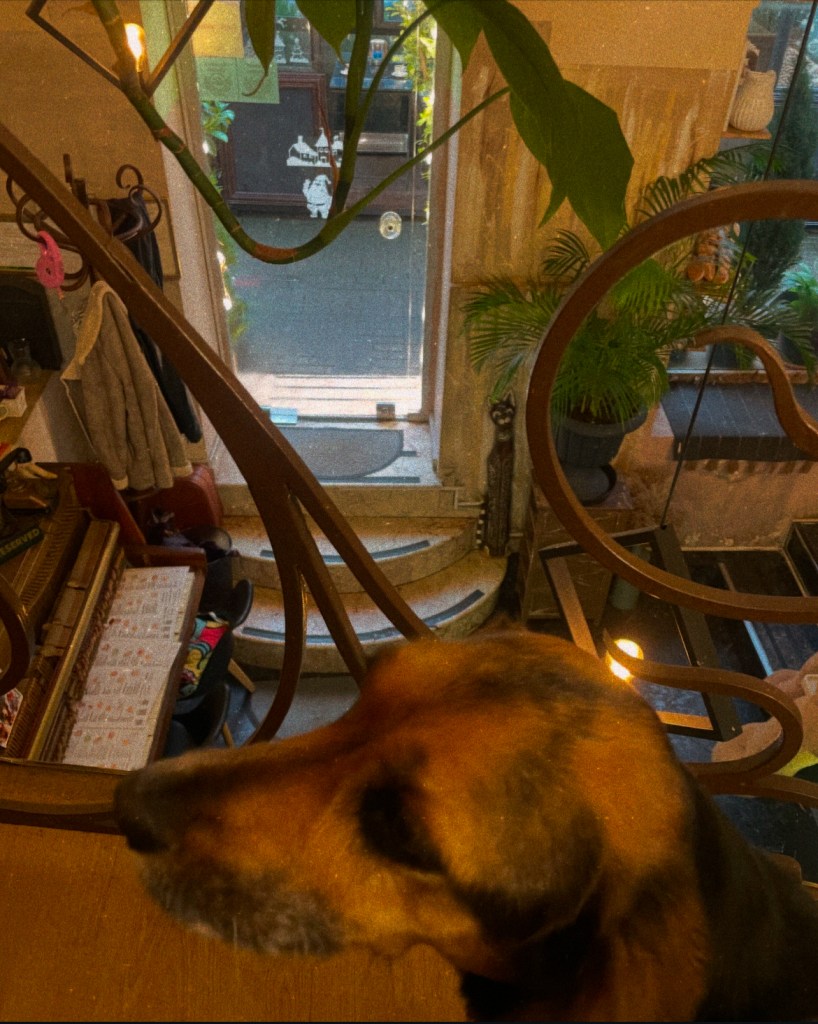
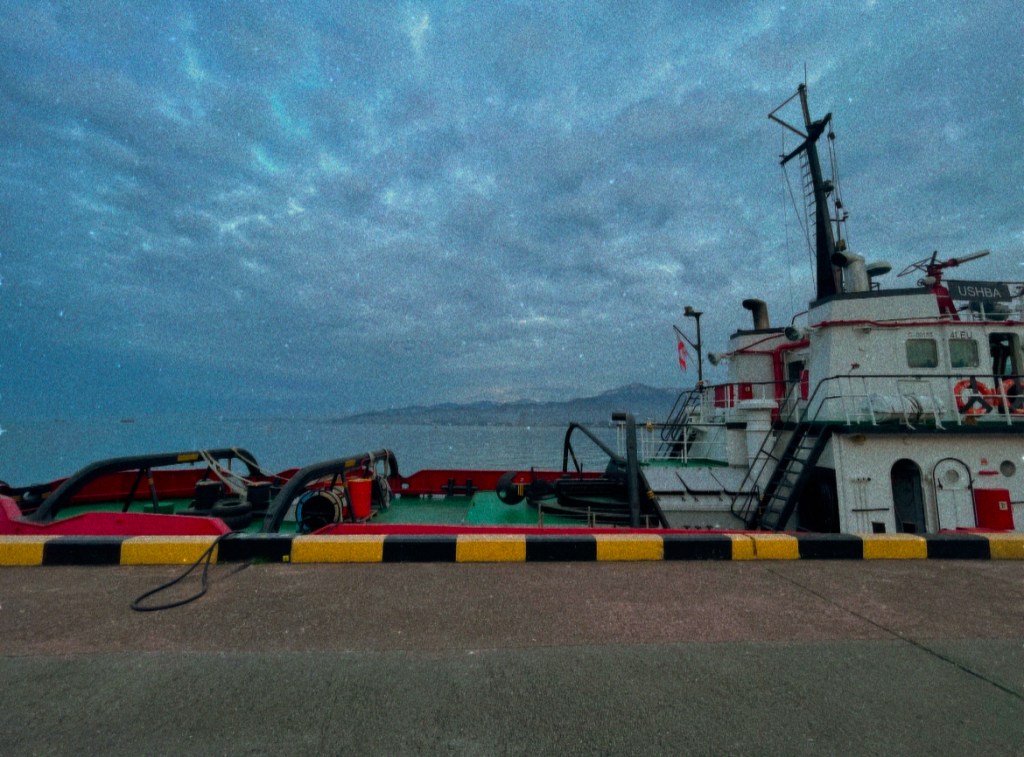
Postcards:
 READING & WRITING TO MAKE MEANING OF THE WORLD AND BEYOND
Everything that comes to mind sounds trivial after what you have been through, so I will just wish you all the very best for the new year, and hope that you will write a lot more.
LikeLiked by 1 person
Thank you, Basia. Wishing you an amazing New Year!
LikeLike
stunning! Reports Highlight [Social Justice Movements] and Their Impact 2025 inspiring
LikeLike